00:00
00:00
Newgrounds Background Image Theme

CapacitorCat just joined the crew!

We need you on the team, too.

Support Newgrounds and get tons of perks for just $2.99!

Create a Free Account and then..

Become a Supporter!

Emulating The Fuzzy, Shaky, Old Fim Look on Animations

232 Views | 5 Replies
New Topic Respond to this Topic

i got this really itchy thought in the back of my mind that needs to be scratched, especially since seeing an episode of the simpsons try to mock the old season styles and i just gotta ask around, are there known ways of emulating the old cel animated look for animations on digital programs?


not the usual "just stick a grain and noise filter and call it a day" kind a thing, if i were to do it myself id want to go all in on all of it. the film grain, the shaky frames, the noise, the drop shadows, some glow, all of it.


i got most of everything that makes it click, but what about the shaky, grainy picture?


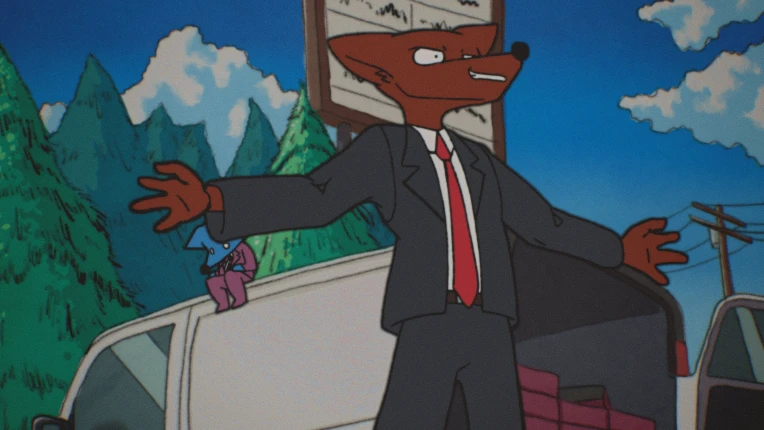
here's an example if you must know what i mean


you might be able to notice that shaky grain look i was talking about.


if anything i just have to know how is something like that pulled off? for future reference of course.


Best regards

BBS Signature

iu_1485712_5747599.gif


I

have

been

honing this look for several years now. I composited my senior film for Pratt Institute, Rat Race, to have this filmic/cel look, and I used a combination of fx macros on Opentoonz, and film grain and shake fx on DaVinci Resolve.


Here's a high quality still from an upcoming animation short I'm working on currently:

iu_1485711_5747599.webp

NG might compress this image for this forum post, so below is an NG Dump link which has the still captured directly from my Davinci timeline:

https://www.newgrounds.com/dump/item/b2b0ead45e6a815272ff2a3b5a178dc0


Generally I try to keep in mind these elements when doing this look:

  • General avoidance of bright saturated colors (Celluloid animation used softer, sometimes low contrast palettes, though if an old animation is remastered the colors may be touched up to not appear so)
  • Cast shadows made by layers that are placed atop one another.
  • Softening of the image so as not to appear too sharp
  • Slight slight chromatic abberation
  • Gate weave. The shaky effect you've noticed. Sometimes resulting from improper scanning of the film reel to broadcast videotape formats, other times resulting naturally from the film reel jittering in the projector feed.
  • Film grain.


Before I get ahead of myself I've been looking to do a write up and tutorial of my process, which would probably entail it's own separate forum thread... Would this be something of interest?


At 11/1/25 08:32 PM, RobC3 wrote:

I
have
been
honing this look for several years now. I composited my senior film for Pratt Institute, Rat Race, to have this filmic/cel look, and I used a combination of fx macros on Opentoonz, and film grain and shake fx on DaVinci Resolve.
https://www.newgrounds.com/portal/view/948323

Here's a high quality still from an upcoming animation short I'm working on currently:

NG might compress this image for this forum post, so below is an NG Dump link which has the still captured directly from my Davinci timeline:
https://www.newgrounds.com/dump/item/b2b0ead45e6a815272ff2a3b5a178dc0

Generally I try to keep in mind these elements when doing this look:

Before I get ahead of myself I've been looking to do a write up and tutorial of my process, which would probably entail it's own separate forum thread... Would this be something of interest?


oh yes id be very interested on how its done!


Best regards

BBS Signature

At 11/1/25 10:18 PM, Notakin wrote:
At 11/1/25 08:32 PM, RobC3 wrote:

I
have
been
honing this look for several years now. I composited my senior film for Pratt Institute, Rat Race, to have this filmic/cel look, and I used a combination of fx macros on Opentoonz, and film grain and shake fx on DaVinci Resolve.
https://www.newgrounds.com/portal/view/948323

Here's a high quality still from an upcoming animation short I'm working on currently:

NG might compress this image for this forum post, so below is an NG Dump link which has the still captured directly from my Davinci timeline:
https://www.newgrounds.com/dump/item/b2b0ead45e6a815272ff2a3b5a178dc0

Generally I try to keep in mind these elements when doing this look:

Before I get ahead of myself I've been looking to do a write up and tutorial of my process, which would probably entail it's own separate forum thread... Would this be something of interest?

oh yes id be very interested on how its done!


Just touching base that I haven't forgotten about this thread and still on my list of things to do! I have a working draft of a write-up sitting on my desktop, but it's still incomplete :(


iu_1509564_5747599.png


At 11/1/25 08:32 PM, RobC3 wrote:

I
have
been
honing this look for several years now. I composited my senior film for Pratt Institute, Rat Race, to have this filmic/cel look, and I used a combination of fx macros on Opentoonz, and film grain and shake fx on DaVinci Resolve.
https://www.newgrounds.com/portal/view/948323

Here's a high quality still from an upcoming animation short I'm working on currently:

NG might compress this image for this forum post, so below is an NG Dump link which has the still captured directly from my Davinci timeline:
https://www.newgrounds.com/dump/item/b2b0ead45e6a815272ff2a3b5a178dc0

Generally I try to keep in mind these elements when doing this look:

Before I get ahead of myself I've been looking to do a write up and tutorial of my process, which would probably entail it's own separate forum thread... Would this be something of interest?


What happens if the colors are very saturated? Like this:

iu_1513858_27207381.png


As above, so below

What you reap, is what you'll sow

BBS Signature

At 12/28/25 11:37 AM, Dirkalicious wrote:
At 11/1/25 08:32 PM, RobC3 wrote:

I
have
been
honing this look for several years now. I composited my senior film for Pratt Institute, Rat Race, to have this filmic/cel look, and I used a combination of fx macros on Opentoonz, and film grain and shake fx on DaVinci Resolve.
https://www.newgrounds.com/portal/view/948323

Here's a high quality still from an upcoming animation short I'm working on currently:

NG might compress this image for this forum post, so below is an NG Dump link which has the still captured directly from my Davinci timeline:
https://www.newgrounds.com/dump/item/b2b0ead45e6a815272ff2a3b5a178dc0

Generally I try to keep in mind these elements when doing this look:

Before I get ahead of myself I've been looking to do a write up and tutorial of my process, which would probably entail it's own separate forum thread... Would this be something of interest?

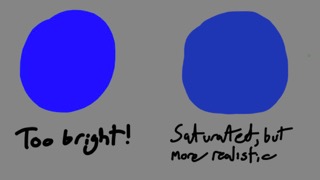
What happens if the colors are very saturated? Like this:


My point on color saturation is just meant to touch on the fact that a computer is capable of producing very bright and saturated color, moreso than what would be possible with the kind of real-life paint that would have been applied to classic animation cels. It's why in the printing business their computers are calibrated to work within the same CMYK color system that printers use, as opposed to the RGB system computer screens use. That way a print designer won't accidentally use a color that a printer is unable to reproduce.

iu_1513970_5747599.jpg


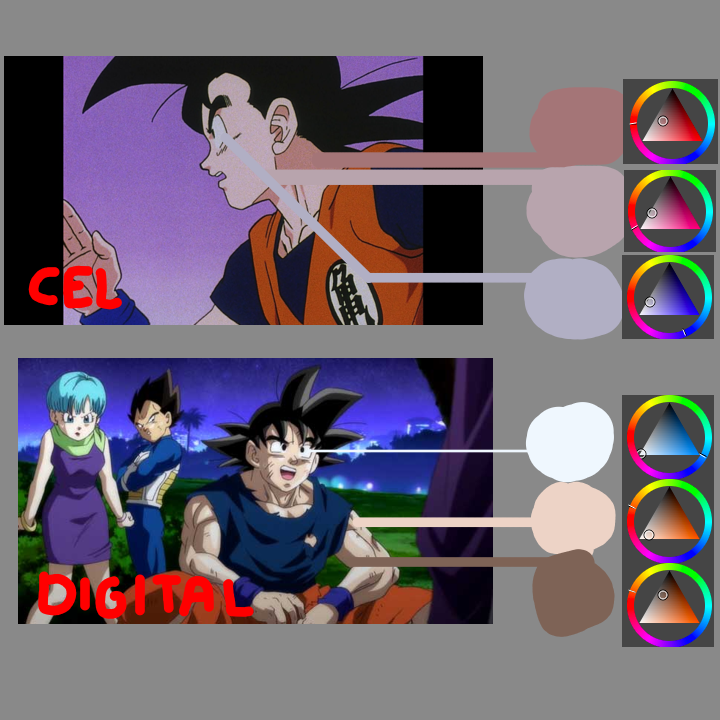
Next to saturation, the contrast between the palletes is arguably more important.

iu_1513971_5747599.png


There's a bit of an optical illusion going on. In a vacuum, the cel animation colors can appear striking! But, when you take an eyedropper tool and analyze them, you realize "Hey, the midtones and the shadow colors aren't really that far off from each other!". And next to that, the cel image is quite dark too at the same time. Cel animation art is capable of having the appearance of strong contrast while actually displaying not very much (in comparison to digital art). More to that point, you can see that the pure black paint used for Goku's hair in the cel image, doesn't even appear as pure black when scanned in!


This is not to say that film isn't capable of capturing bright and vivid color, it certainly can. But in that celluloid animation process, the drawings were just simple paintings photographed in a lit room, I'm not even sure how bright it would have been in the photography-capturing room of a studio.


Also, miscellaneously but still important, take into account that a digital remaster of a cel-animated show or movie may almost certainly touch up the colors during the remastering process to appear more deep and vivid.